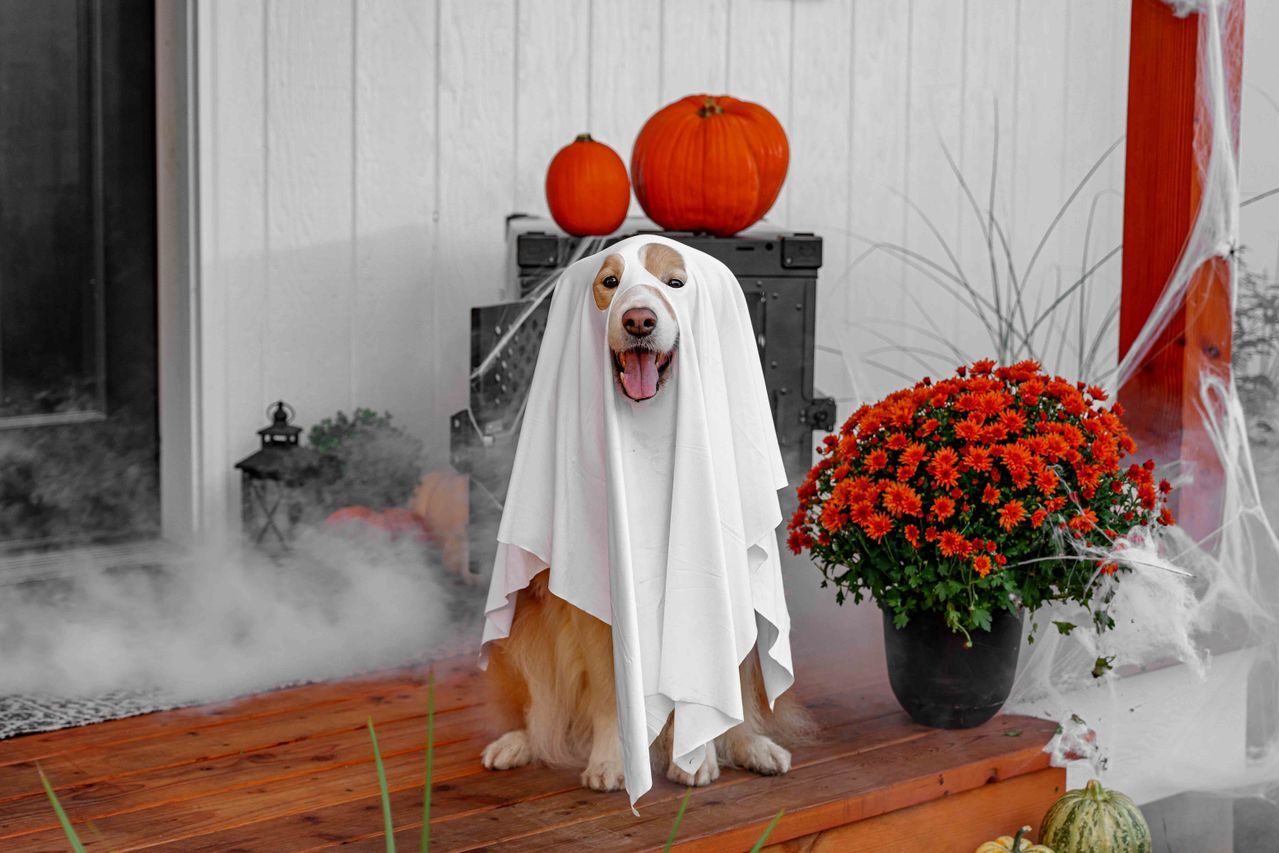
A few simple precautions can help keep Halloween fun and safe.
On a normal night, one visitor might be exciting for your pet. On Halloween, the doorbell could ring dozens of times while strangers in masks, hats, capes, and maybe a few inflatable costumes appear at the front door.
Even a usually social pet may decide this is all a bit too much. But there are a few things you can do to make your pet a little more comfortable with the festivities.
Give them a retreat
Set up a comfortable space away from the front door with their bed, water, favorite toys, and a special treat. Many cats naturally cope with noise and strangers by disappearing. Make sure their quiet room also has litter and somewhere covered or elevated to hide.
For pets who are easily startled by visitors or noise, it is usually easier to get them settled somewhere comfortable before trick-or-treating starts.
Cats can slip through an open door surprisingly quietly. For cats who normally have access to the entryway, Halloween is a good night to restrict them to a different part of the house.
Get ahead of the doorbell
If you live in a neighborhood with lots of trick-or-treaters, consider sitting somewhere you can see them coming and meet them at the door before they have a chance to ring or knock. Fewer surprise doorbells can make the evening much calmer for pets who bark, startle, or get worked up every time someone arrives.
Beware of escape artists
With the door opening and closing all evening, make sure pets are behind a gate, in another room, or otherwise safely separated from the entrance.
Check those ID tags. Make sure your pet is wearing current identification and that their microchip information is up to date.
Let them skip the meet-and-greet
Kids in costumes can look and sound very different from ordinary visitors. If your pet seems unsure or might be reactive, there is no need to encourage an introduction.
Unfortunately, the best part of Halloween for humans is also one of the biggest hazards for pets.
Keep candy bowls, trick-or-treat bags, and children's candy stashes well out of reach. A few things deserve particular attention:
- Chocolate, especially dark chocolate
- Sugar-free candy and gum containing xylitol, which can be extremely dangerous for dogs
- Wrappers are also a hazard. Cats may be more interested in batting around a crinkly candy wrapper than eating the candy itself, while dogs may swallow the whole package in pursuit of what is inside. Foil, cellophane, sticks, and plastic wrappers can all become choking or intestinal-blockage hazards if swallowed.
And remember: "out of reach" may need to mean more than the edge of the coffee table. A determined dog can accomplish impressive things when a bag of candy is involved. And any cat owner knows they can reach all kinds of surfaces you may assume are safe.
If your pet eats something toxic, contact your veterinarian or a pet poison control service promptly rather than waiting to see if symptoms develop.
Check out Pet Questions and get answers tailored to your pet. Exclusively for members.
Try Our Pet Q&AWant your pet to join the fun? Set aside a pet-safe treat of their own so they can participate without raiding the Halloween haul.
Halloween decorations can turn even a familiar home into a whole new world for a curious pet. Skeletons, pumpkins, cobwebs, blinking lights, and candles all bring new things to sniff, swat, chew, climb, or knock over.
Choose fake flames when you can
Battery-operated candles are much safer around wagging tails, curious noses, and cats who believe every surface belongs to them.
Hide cords and batteries
Electrical cords can cause burns or shocks if chewed, and swallowed batteries can cause serious internal injuries.
Watch the little stuff
Small decorations like fake cobwebs, costume pieces, yarn, and other dangling pieces can quickly turn into chew toys or swallowing hazards. These stringy bits can be especially tempting to cats and dangerous if swallowed.
Keep glow sticks out of mouths
The liquid in most glow sticks is considered low-toxicity, but it is extremely bitter and irritating. If a dog or a cat bites into one, you can see sudden heavy drooling or foaming, gagging, retching, vomiting, and agitation.
Pet costumes can be adorable, but your pet may not feel the same way. If your pet genuinely does not mind dressing up, make sure the costume lets them move, see, hear, breathe, and go to the bathroom normally. Avoid tight elastic, dangling pieces, and anything they can easily chew off.
If your pet freezes, hides, struggles, pants, or spends the whole time trying to remove their costume, take the hint. A festive bandana or bowtie (or their natural birthday suit) is a perfectly respectable Halloween look.
Between the doorbell, the candy bowl, and the decorations, Halloween asks a lot of every pet in the house. A little preparation goes a long way toward keeping the night fun instead of stressful.
Register your pet now so a finder, shelter, or veterinary practice can reach you quickly if your pet gets lost, especially on a busy night like Halloween.
Register Your Pet