
Microchip Guides
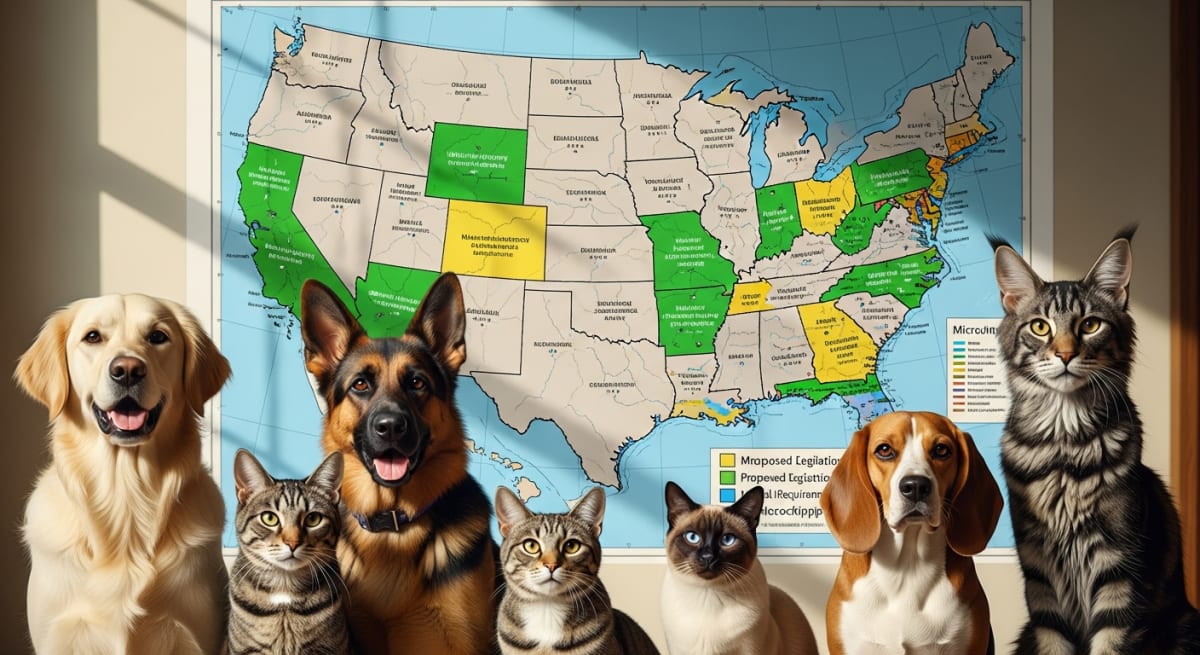
Pet Microchipping Laws by State: Is It Required Where You Live?
Learn which states require pet microchipping, understand the legal requirements, and ensure your pet meets local compliance standards.
24/7 Lost Pet Support: 1-800-938-4909

Veterinarians debunk the most common pet microchip myths to help owners make informed decisions about pet safety and recovery.
May 11, 2026
By Pet Registration and Recovery Team
Pet microchips have become one of the most effective tools for reuniting lost pets with their families, yet persistent myths continue to prevent many pet owners from taking advantage of this life-saving technology. Working with thousands of pet owners every year, we've encountered these misconceptions repeatedly, and veterinarians across the country share our frustration with the misinformation circulating about microchip safety and functionality.
Let's separate fact from fiction by examining the most common pet microchip myths and what veterinary professionals actually have to say about them.
This is perhaps the most widespread misconception about pet microchips. Many pet owners believe that once their pet has a microchip, they can track their location in real-time using their smartphone or computer.
Veterinarians report having to explain this misconception to clients regularly. Microchips are passive devices - they don't have batteries or transmit signals. They only work when a scanner is placed directly over them.
Pet microchips are about the size of a grain of rice and contain only a unique identification number. When a scanner is held close to the chip (typically 2-4 inches away), it activates the chip to transmit its ID number. This technology is called Radio Frequency Identification (RFID), and it cannot determine location.
Think of it like this: if your pet goes missing in your neighborhood, the microchip won't help you locate them until someone finds your pet and takes them to a veterinarian or shelter to be scanned.
This fear stems from isolated reports and studies that have been taken out of context. Some pet owners worry that the foreign object will cause tumors or other health complications.
Veterinary oncologists consistently report that microchip-related cancer cases are extraordinarily rare. In decades of practice with thousands of microchipped animals, documented cases of microchip-related tumors are virtually nonexistent.
Multiple large-scale studies have examined this issue. The British Small Animal Veterinary Association reviewed over 4 million microchipped animals and found only two cases where tumors were potentially linked to microchips. That's a rate of 0.00005%.
To put this in perspective, your pet faces much higher risks from everyday activities like riding in a car or playing in the yard than they do from having a microchip implanted.
The cancer risk is so extraordinarily rare that the benefits of microchipping far outweigh any theoretical risk. Consider these compelling statistics: pets with registered microchips are returned to their owners 52% of the time when lost, compared to only 22% for pets without microchips. For cats, the difference is even more dramatic - microchipped cats have a 38% return rate versus just 2% for non-microchipped cats. These life-saving benefits make the minuscule cancer risk statistically irrelevant in veterinary practice.
This myth causes the most heartbreak for pet owners whose lost pets are found but can't be reunited with their families. Many people assume that once their veterinarian implants the microchip, the process is complete.
Veterinarians frequently encounter situations where they scan found pets with chips only to discover the registration was never completed or the information is outdated. The microchip is just the first step - without proper registration, it's essentially useless.
The microchip implantation and registration are two separate processes. After your pet receives their microchip, you must:
As an AAHA-partnered registry, we see this problem frequently. Pet owners often contact us months or years after their pet was microchipped, realizing they never completed the registration process.
Some pet owners worry that microchips have expiration dates and will stop working after a certain period, requiring surgical replacement.
Veterinarians confirm that microchips are designed to last the lifetime of your pet. The technology is incredibly durable, with chips that were implanted decades ago still working perfectly when scanned.
Modern microchips use biocompatible glass and have no moving parts or batteries that can fail. The RFID technology is the same used in many long-term applications, from inventory management to passport chips.
However, while the microchip itself doesn't expire, your registration information can become inactive if you don't maintain it. Some registry services charge annual fees, and if these aren't paid, your pet's information might become inaccessible to those trying to help your lost pet.
Fear of the implantation process keeps some pet owners from microchipping their pets. They imagine a surgical procedure or assume it's extremely painful for their animal.
Veterinarians consistently report that microchip implantation is no more painful than a routine vaccination. The procedure uses a slightly larger needle but takes only about two seconds. Most pets barely react, and there's no anesthesia required.
The microchip is implanted using a pre-loaded syringe with a sterile needle. The injection site is typically between the shoulder blades, where there's loose skin and minimal nerve endings. Many pets are microchipped during routine veterinary visits without any sedation.
Puppies and kittens can be safely microchipped as early as 6-8 weeks old, and the procedure is often done during spay/neuter surgeries when the pet is already under anesthesia, though this isn't necessary.
This technical myth can have serious consequences for pet recovery. Some pet owners assume that any scanner will detect their pet's microchip, regardless of the chip manufacturer or frequency.
Veterinarians and animal rescue workers have encountered situations where found pets were scanned with older scanners that couldn't detect their chip frequency. Fortunately, most veterinary clinics and shelters now use universal scanners, but it's not guaranteed everywhere.
Microchips operate on different frequencies - primarily 125 kHz, 128 kHz, and 134.2 kHz. While most modern scanners can read multiple frequencies, older equipment might miss certain chips. This is why some pets benefit from being registered with multiple databases - it increases the chances that whoever finds them will be able to access the owner's information.
Some pet owners worry that the microchip will migrate from the implantation site to other parts of their pet's body, potentially causing internal damage.
Veterinary professionals explain that modern microchips are designed with biocompatible materials that encourage tissue growth around them. While minor migration of an inch or two can occasionally occur, especially in the first few weeks after implantation, significant movement is extremely rare.
The chip becomes encapsulated by the pet's tissue, essentially anchoring it in place. Even if slight movement occurs, it doesn't affect the chip's functionality or cause health problems. Veterinarians and shelter workers are trained to scan a broader area if they don't immediately detect a chip in the standard location.
Many owners of indoor pets assume their animals will never get lost, making microchipping unnecessary.
Veterinarians frequently encounter pet owners who initially claimed their indoor pets would never escape, only to receive frantic calls months later when the same pet went missing. Natural disasters, home repairs, pet sitters, or even a moment of curiosity can lead to an indoor pet becoming lost.
Consider these scenarios that happen regularly:
Indoor pets who do get outside are often the most vulnerable because they lack street smarts and may not know how to find their way home.
Privacy concerns lead some pet owners to believe that microchips store their personal data, including names, addresses, and phone numbers, making this information accessible to anyone with a scanner.
Veterinarians emphasize that the microchip itself only contains a number - nothing else. It's like a license plate number. The number means nothing until someone looks it up in a database.
When a lost pet is found and scanned, the finder gets only the microchip number. They must then contact the appropriate registry database to report the found pet. The registry then contacts the registered owner, maintaining privacy while facilitating the reunion.
Your personal information is stored securely in the registry's database, not on the chip itself. Reputable registries have strict privacy policies and only release information for legitimate pet recovery purposes.
Some pet owners think all microchip registries are essentially the same and choose based solely on price or convenience. This approach can significantly reduce your pet's chances of being successfully reunited with you.
Animal control professionals and veterinarians recommend registering with an AAHA (American Animal Hospital Association) partnered registry for the best chance of recovery. These registries maintain the highest standards for data security, customer service, and network coverage that veterinary professionals trust.
AAHA-partnered registries offer several advantages:
Pet Registration and Recovery is a premier AAHA-partnered registry that provides comprehensive microchip registration services trusted by veterinarians across the country. Our registry ensures your pet's information is accessible to the professionals most likely to help in a recovery situation.
Understanding the facts about pet microchips helps you make informed decisions about your pet's safety and recovery options. While no system is perfect, microchipping remains one of the most effective ways to ensure lost pets are reunited with their families.
The key is proper education and maintenance. Once you understand how microchips actually work - and what they don't do - you can take appropriate steps to maximize their effectiveness while avoiding unnecessary worries about safety or privacy.
Remember that getting your pet microchipped is just the beginning. Keeping your registration information current and ensuring your pet is registered with a reputable database are equally important steps in the process.
If your pet is already microchipped but you're not sure about your registration status, now is the perfect time to verify and update your information. A few minutes spent on proper registration could make all the difference in bringing your pet home safely if they ever go missing. Visit Pet Registration and Recovery to register your pet's microchip with our trusted AAHA-partnered registry and ensure your contact information is up to date.
A pet microchip is a passive RFID device about the size of a grain of rice that contains only a unique identification number. It doesn't have a battery or transmit signals - it only activates when a scanner is placed 2-4 inches away to read the ID number.
You cannot track your pet's location with a microchip because they are passive devices without GPS capability. The chip only works when someone finds your pet and takes them to a veterinarian or shelter to be scanned for the identification number.
Getting a microchip does not automatically register your pet in a recovery database. You must separately register the chip number with your contact information, or the chip will be useless for reuniting you with your lost pet.
Registration is absolutely necessary after microchip implantation because the chip alone cannot reunite you with your lost pet. Without registering your contact information in a database, the identification number serves no purpose for pet recovery.
Learn which states require pet microchipping, understand the legal requirements, and ensure your pet meets local compliance standards.
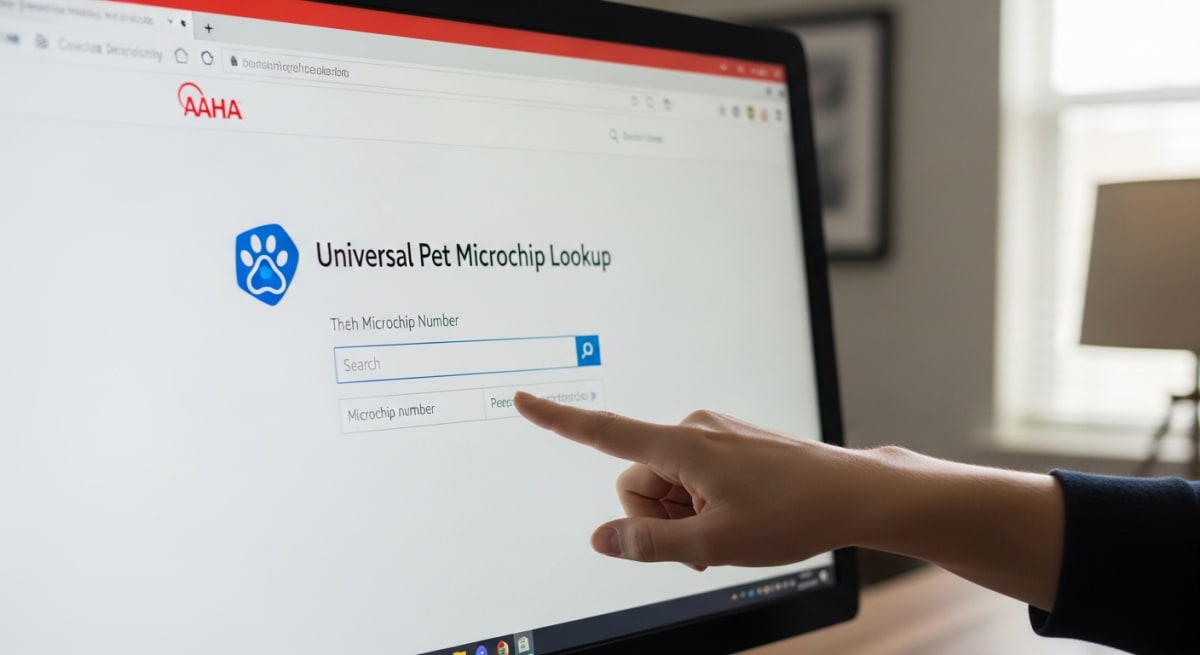
The AAHA Universal Pet Microchip Lookup connects you to registration information across multiple databases using just your pet's microchip number.
Discover why your pet's microchip isn't registered and get step-by-step solutions to fix registration problems fast.